Showing posts with label Barthes. Show all posts
Showing posts with label Barthes. Show all posts
Monday, January 26, 2009
student presentation: The Introduction to Structural Analysis of Narrative
by Amanda Moffat and Mandy Sellers


Tuesday, January 20, 2009
Links: Reading Materials and Module Guide
As discussed in class, here are the links to several of the texts we've already discussed:
The Language of New Media by Lev Manovich is on his own website here: http://www.manovich.net/LNM/Manovich.pdf
Barthes' "Death of the Author Essay" is here: http://evans-experientialism.freewebspace.com/barthes06.htm
Barthes' "An Introduction to the Structural Analysis of Narrative," is here in New Literary History, Vol. 6, No. 2, On Narrative and Narratives (Winter, 1975), pp. 237-272. You have access to the article with your Athens Account, http://www.jstor.org/stable/pdfplus/468419.pdf
Jorge Luis Castillo's “Pierre Menard and the School of the Skeptics,” Hispanic Review, Vol. 71, No. 3 (Summer, 2003), pp. 415-428 is available here: http://www.jstor.org/stable/pdfplus/3247249.pdf, again, use your Athens Account to access this via jstor.
A useful essay on Barthes is "Roland Barthes from 'The Death of the Author' to Camera Lucida: The Trajectory Made by Critical Theory" that can be found here: http://www.inter-disciplinary.net/ptb/flfc/flfc1/kuminova%20paper.pdf
The module guide will be uploaded soon but in the meantime here is some information for you.

****PLEASE NOTE: the coursework deadline is not confirmed!!!****
The Language of New Media by Lev Manovich is on his own website here: http://www.manovich.net/LNM/Manovich.pdf
Barthes' "Death of the Author Essay" is here: http://evans-experientialism.freewebspace.com/barthes06.htm
Barthes' "An Introduction to the Structural Analysis of Narrative," is here in New Literary History, Vol. 6, No. 2, On Narrative and Narratives (Winter, 1975), pp. 237-272. You have access to the article with your Athens Account, http://www.jstor.org/stable/pdfplus/468419.pdf
Jorge Luis Castillo's “Pierre Menard and the School of the Skeptics,” Hispanic Review, Vol. 71, No. 3 (Summer, 2003), pp. 415-428 is available here: http://www.jstor.org/stable/pdfplus/3247249.pdf, again, use your Athens Account to access this via jstor.
A useful essay on Barthes is "Roland Barthes from 'The Death of the Author' to Camera Lucida: The Trajectory Made by Critical Theory" that can be found here: http://www.inter-disciplinary.net/ptb/flfc/flfc1/kuminova%20paper.pdf
The module guide will be uploaded soon but in the meantime here is some information for you.

****PLEASE NOTE: the coursework deadline is not confirmed!!!****
Module Code: IOCT 5003
Module Title: Digital Cultures
Semester 2
Academic Year: 2008/2009
Module Leader: Dr. Jessica Laccetti
Lecture Location: IOCT Main Lab
Contact Details
Room: 0.80, Gateway House
Email: jlaccetti@dmu.ac.uk
1 Module Description
This module gives an introduction to key ideas in critical and cultural theory that affect creative technologies and the creative industries. Areas covered include Modernism, Postmodernism, Structuralism, Poststructuralism, Semiotics, Linguistic Theory, Anthropology, Reader-Response, Post-Colonialism, Multimodality, Hypertext Theories, Transdisciplinarity, The Ethnography of Cyberspace and Feminism.
2 Learning Outcomes
On successful completion of the module the students will demonstrate;
Increased understanding of critical theory and cultural context.
Detailed knowledge of key ideas in the twentieth and twenty-first centuries.
Increased understanding of the role of ideas in shaping technologies.
Ability to articulate theoretical concepts.
Ability to make critical analysis of cultural artefacts.
4 Assessment
Students may be assessed in any taught module on up to a maximum of two occasions, i.e. first attempt and reassessment. Please see section 4.2 for further information.
Assignments should be handed into the IOCT Office (Gateway House 0.80) by the date and time detailed below. Please remember to include a Receipt for Coursework form with your work – this will be your proof of submission.
Assessment: Essay
Volume of Assessment: 3000 words
Weighting: 100%
% Threshold: 40%
Due Date: (NOT YET CONFIRMED!): 01/05/09, (Week 16), 16:00
4.1 Criteria for Assessment
The assessment method allows the student to demonstrate his/her understanding of critical and cultural theory key to the creative technologies through an essay related to the areas listed in the module syllabus. The assessment relates to the learning outcomes by allowing the student to analyse and articulate theoretical concepts, demonstrating a detailed knowledge of key ideas in the twentieth and twenty-first centuries and an understanding of the role of ideas in shaping technologies.
The module operates to the generic University marking criteria which provide summative results and transcripts in the form of percentage marks.
Tuesday, November 13, 2007
Lecture 7: Barthes, Derrida, Manovich - Part Trois
S/Z - structuralist analysis of "Sarrassine" by Honore de Balzac
Paul: The antithesis is the battle between two plenitudes (page 27) - in the structural analysis of Sarrasine Balzac is setting up things that are diametrically opposed (binary oppositions)
Beauty cannot assert itself in the form of a citation...it is referred to in an infinity of codes, so it is a construct, it is always signified (page 33)
Paul: Sarrasine is an impersonal network on symbols combined under the proper name of Sarrasine...we are searching for a transitory site of the text... (page 94)
What is "readerly" and what is "writerly."
Andy: Alice and Wonderland: "it means what I want it to mean"
Paul: interesting reading a structural analysis of language knowing it has been translated, there is no translation for masculine and feminine (think of Derrida's comment on the french word for "lie" meaning "beastly" but actual usage is far more subtle)
Andrew: "pattern". Used to give presentation to artists, designers, computer programmers etc...and the use of the word "pattern" highlighted problem with translations. For scientists pattern = nobel prize, for maths you can de pattern, in art if one makes patterns implies no originality (mere pattern-making). You realise there is a whole subtext of meanings for one word. Thus, semantic and approach differences is what makes this Masters' course so different and challenging.
"knowing what you're not is just as valuable as knowing what you are" (Andrew)
How many humanities scholars have patents? Just goes to show you the different kinds of goals between sciences and humanities and raises questions and challenges for translations between ideas/schools of thought.
Read: Zazie in the Metro (Penguin Classics) (Paperback)
by Raymond Queneau - about colloquial French language
Also look at his Exercises de style, 1947
Source.
Derrida and Language
Source.
Student Task from last week: Structuralist Critique
Paul's move from analogue to digital:


Andy's shift from digital to analogue (which for the purpose here must be re-translated to digital)


Paul: The antithesis is the battle between two plenitudes (page 27) - in the structural analysis of Sarrasine Balzac is setting up things that are diametrically opposed (binary oppositions)
Beauty cannot assert itself in the form of a citation...it is referred to in an infinity of codes, so it is a construct, it is always signified (page 33)
Paul: Sarrasine is an impersonal network on symbols combined under the proper name of Sarrasine...we are searching for a transitory site of the text... (page 94)
What is "readerly" and what is "writerly."
Andy: Alice and Wonderland: "it means what I want it to mean"
Paul: interesting reading a structural analysis of language knowing it has been translated, there is no translation for masculine and feminine (think of Derrida's comment on the french word for "lie" meaning "beastly" but actual usage is far more subtle)
"What is most often called 'relevant'? Well, whatever feels right, whatever seems pertinent, apropos, welcome, appropriate, opportune, justified, well-suited or adjusted, coming right at the moment when you expect it--or corresponding as is necessary to the object to which the so-called relevant action relates: the relevant discourse, the relevant proposition, the relevant decision, the relevant translation. A relevant translation would therefore be, quite simply, a 'good' translation, a translation that does what one expects of it, in short, a version that performs its mission, honors its debt and does its job or its duty while inscribing in the receiving language the most relevant equivalent for an original, the language that is the most right, appropriate, pertinent, adequate, opportune, pointed, univocal, idiomatic, and so on."(177)
Andrew: "pattern". Used to give presentation to artists, designers, computer programmers etc...and the use of the word "pattern" highlighted problem with translations. For scientists pattern = nobel prize, for maths you can de pattern, in art if one makes patterns implies no originality (mere pattern-making). You realise there is a whole subtext of meanings for one word. Thus, semantic and approach differences is what makes this Masters' course so different and challenging.
"knowing what you're not is just as valuable as knowing what you are" (Andrew)
How many humanities scholars have patents? Just goes to show you the different kinds of goals between sciences and humanities and raises questions and challenges for translations between ideas/schools of thought.
Read: Zazie in the Metro (Penguin Classics) (Paperback)
by Raymond Queneau - about colloquial French language
Also look at his Exercises de style, 1947
"English writers write spoken English and American writers write spoken American. And the most striking thing of all is that their scientists, their scholars and their historians write an English that is the English of the man in the street, whereas in France, when it comes to science or history, we are still obliged to write in formal language. I want to write in a living language--in the language of the ordinary man. The language you want to write in is your so-called maternal language."
Source.
Derrida and Language
The moment of maximum freedom is reached by translation with Jacques Derrida's translation deconstructionist theory. That, even if Derrida's theory of translation states that it is enemy of the pursuing of freedom. Derrida's translation is free because it doesn't aim even to be free, because it overlooks any and all duty, be it philological or liberal, and revolts at any intention to communicate the prototext's content, to "imprecisely transmit an unessential content". In Des tours de Babel, of 1985, he enunciates the four principles of translation:
1. The translator's task is not revealed by any reception.
2. Translation has not as essential aim to communicate.
3. Translation is neither an image nor a copy.
4. Translation has no obligation to transport contents, yet must evidence the affinity between languages, must exhibit its potential (1985: 386-395).
Derrida's is a primordial translation allowed by the subjective interpretant sign, that has no aim to produce a text apt for being understood, that has no aim to communicate to the outside. A "free" translator is an exhibitionist who enjoys in flaunting his ability to translate his way. The Derridian translator is a narcissist, because he doesn't care about text except as a mirror of his bravura; he is interested in himself as capable translator.
Source.
Student Task from last week: Structuralist Critique
Paul's move from analogue to digital:
Andy's shift from digital to analogue (which for the purpose here must be re-translated to digital)


Wednesday, October 17, 2007
Week 3 - Postmodernism
Notes on our discussion:
(nb our discussion on Barthes and Wittgenstein was in the context of digital culture)
~Barthes, Mythologies 64
~Barthes, Mythologies 192

~~~~~
Lugwig Wittgenstein - Tractatus Logico-Philosophicus
"2.12 - The picture is a model of reality."
Here we debated what the word "world" means and whether there exists a *universal* understanding of "world" and does the term world include what lies outside of our perceptions?
For Wittgenstein a picture (any picture?) is a model of reality because the objects in the image relate to each other in the same way that objects in the world relate to each other. If the relations do not correspond, then the picture is not of something in the world. (But this can still be considered reality because the world includes the "non-existence" of things).
~~~R. J. Fogelin, Wittgenstein (Routledge & Kegan Paul, 1976) 12.
~~~~~

Talking about absolutism led us back to Barthes and his "Death of the Author." We talked about images and representations and the imbued coded meanings. We talked about context (that of the *original* author and that of the reader/author).
We kept coming back to the question of authenticity of voice and of text.
While structuralist critics would see the text as deeply related to a real-life author. As Barthes notes:
For Barthes, texts are tissues of quotations, patchworks of others texts. Thus, there is no organised whole constructed by an authorial presence.
~~~~~
Task: After collecting evidence during our walk along the canal, create a multimodal response to the notion of "authorship" in a digital culture.
(nb our discussion on Barthes and Wittgenstein was in the context of digital culture)
"... ce qui m'a toujours préoccupé [...] c'est le problème de la signification des objets culturels."
~Barthes, Mythologies 64
"Dans la vie quotidienne, j'éprouve pour tout ce que je vois et entends une sorte de curiosité, presque d'affectivité intellectuelle qui est de l'ordre du romanesque."
~Barthes, Mythologies 192
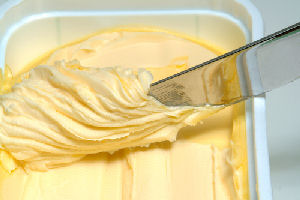
Like Barthes, we're interested in exploring and questioning the perceived *naturalness* or *objectivity* of culture (its objects and codes). We talked about Barthes view (in "Operation Margarine") of French bourgeois culture. Interpriting an ad for margarine Barthes finds negatives or problems associated with a product (like margarine) are raised in order for its benefits to be revered which then outweigh any cons. Barthes explains that this technique is mirrored in discourses of religion, capitalism, and war. To put it simply, drawbacks are noted only as a way of further demonstrating the crucial significance the object or discourse has for culture.
"The episode always begins with a cry of indignation against margarine: 'A mousse? Made with margarine? Unthinkable!' 'Margarine? Your uncle will be furious!' And then one's eyes are opened, one's conscience becomes more pliable, and margarine is a delicious food, tasty, digestible, economical, useful in all circumstances. The moral at the end is well known: 'Here you are, rid of a prejudice which cost you dearly!"
Lugwig Wittgenstein - Tractatus Logico-Philosophicus
"2.12 - The picture is a model of reality."
Here we debated what the word "world" means and whether there exists a *universal* understanding of "world" and does the term world include what lies outside of our perceptions?
For Wittgenstein a picture (any picture?) is a model of reality because the objects in the image relate to each other in the same way that objects in the world relate to each other. If the relations do not correspond, then the picture is not of something in the world. (But this can still be considered reality because the world includes the "non-existence" of things).
“Given that every object must occur in some state of affairs or other (2.0121), we know that given all states of affairs, all objects are given as well. But we have already seen that given the totality of objects, all possible states of affairs are given (2.0124). In other words, given all existing states of affairs, we can construct, by way of the objects they contain, all possible states of affairs — both those that exist and those that do not exist. It is in this way that the structure of reality is implicated in the structure of the world. For quite trivial
reasons, the structure of the world is implicated in the structure of reality. Of course, it still remains a mistake to identify the world with reality, but, in the end, this is something that can be set right without undermining the basic principles of the Tractarian ontology.”
~~~R. J. Fogelin, Wittgenstein (Routledge & Kegan Paul, 1976) 12.

Talking about absolutism led us back to Barthes and his "Death of the Author." We talked about images and representations and the imbued coded meanings. We talked about context (that of the *original* author and that of the reader/author).
"We know that a text does not consist of a line of words, releasing a single “theological” meaning (the “message” of the Author-God), but is a space of many dimensions, in which are wedded and contested various kinds of writing, no one of which is original: the text is a tissue of citations, resulting from the thousand sources of culture. Like Bouvard and Pecuchet, those eternal copyists, both sublime and comical and whose profound absurdity precisely designates the truth of writing, the writer can only imitate a gesture forever anterior, never original."
We kept coming back to the question of authenticity of voice and of text.
While structuralist critics would see the text as deeply related to a real-life author. As Barthes notes:
"The image of literature to be found in ordinary culture is tyrannically centred on the author, his person, his life, his tastes, his passions, while criticism still consists for the most part in saying that Baudelaire's work is the failure of Baudelaire the man, Van Gogh's his madness, Tchaikovsky's his vice. The explanation of a work is awlays sought in the man or woman who produced it, as if it were always in the end, through the more or less transparent allegory of the fiction, the voice of a single person, the author 'confiding' in us."
For Barthes, texts are tissues of quotations, patchworks of others texts. Thus, there is no organised whole constructed by an authorial presence.
Task: After collecting evidence during our walk along the canal, create a multimodal response to the notion of "authorship" in a digital culture.


 (where is the apostrophe?!)
Reading for next week: Lev Manovich's The Language of New Media.
Subscribe to:
Posts (Atom)
